
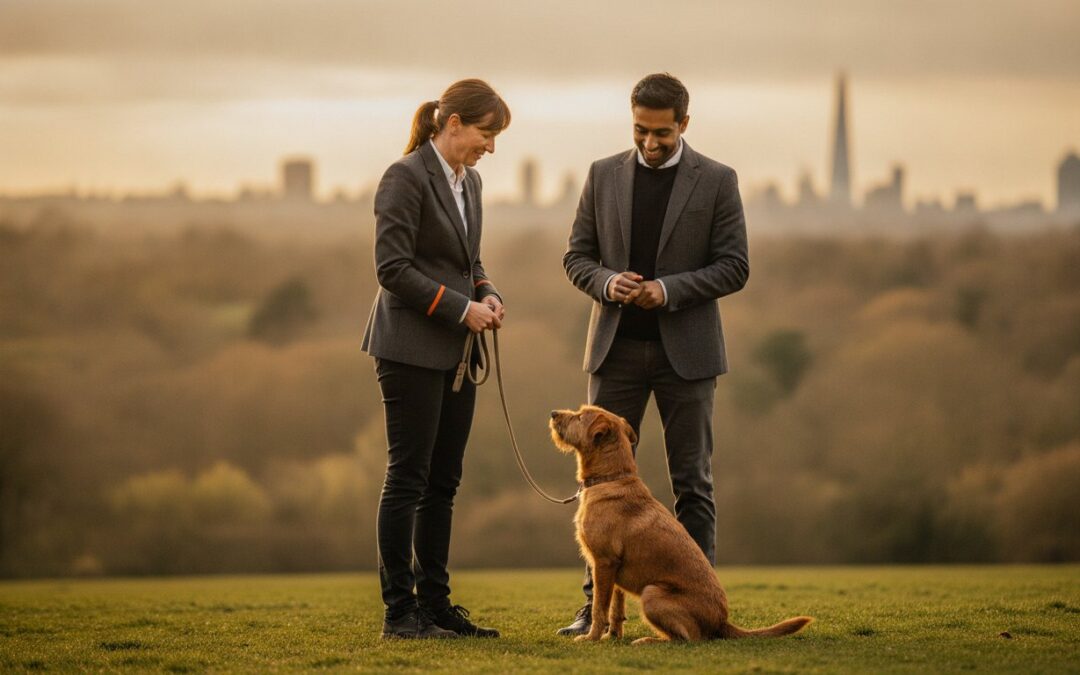
Imagine you’re walking through the narrow, bustling streets of Islington or trying to enjoy a quiet morning at Hampstead Heath, but your heart sinks the moment you spot another dog in the distance. You feel the lead tighten, the familiar surge of adrenaline, and the dread of an impending outburst. Living in the capital presents a unique set of challenges for our canine companions. The constant sensory input and high-density environments can make even a simple toilet break feel like a tactical operation. It’s exhausting to feel like you’re constantly managing a crisis rather than enjoying your dog’s company.
Finding effective dog reactivity training London can feel overwhelming, especially when you’re bombarded with conflicting advice from celebrity trainers who don’t understand the specific pressures of urban life. You deserve a path forward that prioritises your dog’s emotional welfare over rigid obedience. By shifting the focus to a science-backed, ethical mentorship, you can transform these high-trigger situations into manageable moments. This guide explores how bespoke, 1-to-1 support can help you reclaim your walks, foster a bond built on mutual trust, and develop the practical tools needed to navigate the city’s busiest parks with confidence.
Key Takeaways
- Understand how the unique environmental stressors of North West London influence your dog’s emotional state and reactivity levels.
- Discover why evidence-based, non-coercive methods create more reliable results than outdated, force-based training techniques.
- Learn why professional dog reactivity training London is most effective when delivered through 1-to-1 sessions tailored to your dog’s specific triggers.
- Identify the critical questions to ask when vetting a trainer to ensure their methodology aligns with modern welfare standards.
- Gain a clear path toward transforming stressful urban walks into calm, connected experiences through bespoke canine mentorship.
Why Professional Dog Reactivity Training is Essential for London Pups
Reactivity is often misunderstood as a lack of discipline, but it’s actually an overreaction to stimuli, typically rooted in deep-seated fear or frustration. When your dog lunges at a passing cyclist or barks at a neighbour in the hallway, they aren’t trying to be “dominant.” They’re communicating an inability to cope with their current environment. Gaining a thorough grounding in understanding dog behavior helps us see that these actions are physiological responses rather than conscious choices. In the context of a city, these responses are naturally amplified.
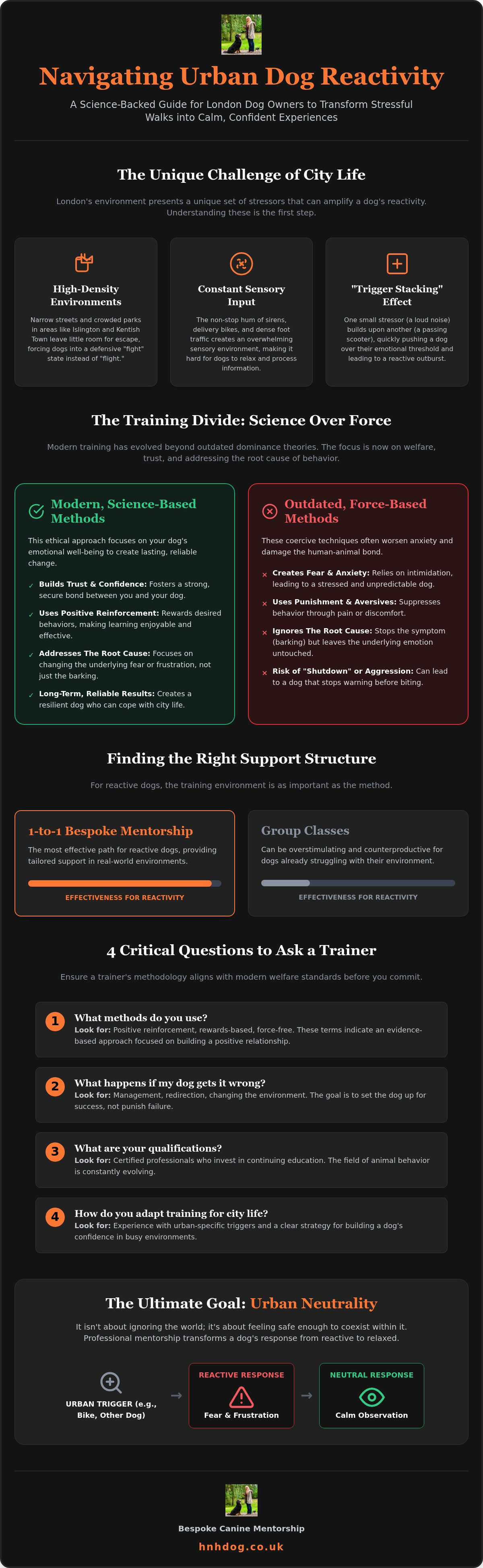
Living in North West London places immense pressure on our dogs. Narrow residential streets in areas like Kentish Town or Queen’s Park leave little room for the “flight” response, often forcing dogs into a defensive state. The constant hum of sirens, the rattle of delivery bikes, and the density of foot traffic create a “trigger stacking” effect where one small stressor builds upon another. Generic “YouTube training” often fails here because it assumes a controlled, quiet environment. It doesn’t account for your dog’s unique temperament or the specific, unpredictable triggers found on a London pavement. Professional dog reactivity training London provides the bespoke strategy needed to handle these real-world variables.
Navigating the Urban Jungle: Training for City Life
Busy green spaces like Hampstead Heath or Highgate Wood are wonderful assets, but they can be overwhelming for a reactive dog. The goal of professional support is to develop “urban neutrality.” We define urban neutrality as a dog’s ability to remain calm despite high-density stimuli. It isn’t about your dog ignoring the world entirely; it’s about them feeling safe enough to exist within it without feeling the need to react defensively. By teaching your dog how to process these sights and sounds, you move away from constant crisis management toward peaceful coexistence.
The Role of a Behavioural Mentor
A professional mentor looks beyond the barking to identify the root cause of the distress. Instead of simply “fixing” a dog through suppression or punishment, we focus on supporting them through their environment. This shift in perspective is vital for long-term success. If you feel your dog’s challenges require a more intensive look at their underlying emotional health, seeking a Dog Behaviourist London can provide the deep-level support needed for complex cases. Investing in expert guidance early is both an emotional and financial win. It prevents the rehearsal of negative habits that become more difficult to modify over time, eventually restoring the bond you share with your companion.
Understanding Modern Training Methods: Science Over Force
The landscape of canine education has evolved significantly over the last two decades. We’ve moved away from the adversarial “Alpha” theories that once dominated the industry, opting instead for evidence-based positive reinforcement. This shift isn’t just about being kind; it’s about efficacy and long-term welfare. When you seek out dog reactivity training London, you’re looking for a solution that addresses the internal emotional state of your dog rather than just suppressing outward symptoms. Coercive methods might stop a bark in the short term, but they often leave the underlying anxiety untouched, leading to unpredictable outbursts later.
Trust is the foundation of any successful relationship. By using non-coercive methods, we build lasting trust rather than fear-based compliance. A dog that obeys because they’re afraid of a “correction” is a dog under constant physiological stress. In a high-pressure city environment, that stress eventually builds up until it becomes unmanageable. Learning to read subtle canine body language allows you to intervene before your dog reaches their “threshold,” which is the point where they can no longer process information or learn. Our holistic, partnership-based approach ensures your dog feels safe, making them more resilient to the triggers they encounter every day.
The Problem with Punishment-Based Training
“Quick fixes” are often tempting when you’re struggling with a reactive dog on a busy pavement. However, aversive tools or harsh physical reprimands often lead to suppressed aggression. A dog might stop lunging because they’re afraid of the consequence, but they’ve simply “shut down” emotionally. This creates a significant risk of fallout in public London spaces. A dog who has been forced to stay quiet may eventually react without the usual warning signs like growling. We prefer to reframe what looks like “misbehaviour” as an unmet emotional need or a desperate plea for more space.
Building a Communication Bridge
Marker training and high-value rewards play a vital role in changing emotional responses. Instead of punishing the reaction, we reward the calm choice, helping your dog associate previously scary triggers with positive outcomes. You become a benevolent leader through clear, consistent, and kind communication. Effective training is a two-way conversation, not a one-way command. This partnership ensures your dog looks to you for guidance when they feel overwhelmed. If you’re ready to start this journey together, our 1-to-1 dog training sessions provide the personalised, ethical guidance your dog deserves.
1-To-1 Training vs. Group Classes: Which is Right for Your Dog?
Deciding between a group class and individual support is a pivotal moment in your dog’s journey. While group settings are often marketed as the default for socialisation, they can be detrimental for a dog already struggling with their environment. Reactive dogs frequently find themselves overwhelmed in traditional “puppy class” formats, where the close proximity of other dogs and people triggers a constant state of high alert. This social pressure makes learning nearly impossible, as the brain’s “fight or flight” response takes over. Choosing dog reactivity training London that focuses on 1-to-1 mentorship allows us to bypass this stress, creating a safe space where your dog can actually process new information.
Training in your dog’s natural environment ensures that the skills you learn are practical and transferable. Whether we’re working in your living room or your local neighbourhood park, we’re addressing the triggers where they actually happen. For busy owners in Watford and across Hertfordshire, bespoke training plans provide a structured way to integrate these lessons into a hectic schedule. You don’t need to worry about the logistics of a stressful journey to a community hall; instead, we focus on the real-world challenges you face every day on your own doorstep.
The Case for 1-to-1 Dog Training in London
Individual sessions provide the personalised attention required to unpick complex issues like leash reactivity or separation anxiety. We work at your dog’s specific pace, ensuring they never feel pushed beyond what they can handle. This is especially vital for rescue dogs. Many rescues have unknown histories and may find the noise and unpredictability of a group setting terrifying. A gentle, non-judgmental introduction to training in a controlled environment builds the confidence they need to eventually navigate the world with you. It’s about quality of interaction over quantity, focusing on calm focus rather than forced exposure.
When to Consider Group Socialisation
Group settings aren’t entirely off the table, but they should be the final step, not the first. Once your dog has a solid foundation of trust and neutrality, you might consider transitioning to managed group scenarios. This is where practising “neutrality”—the ability to be near others without reacting—becomes the goal. For many, this transition is best supported through Professional Dog Walking in London, where socialisation happens in a structured, professional context. It allows your dog to exist in the presence of others while maintaining the calm emotional state we’ve worked so hard to achieve together.
How to Vet a Dog Trainer: Essential Questions for London Owners
Selecting the right support is one of the most critical decisions you’ll make for your dog’s welfare. Currently, the UK dog training industry remains unregulated. This means anyone can call themselves a “professional” without formal qualifications or a background in animal welfare. When searching for dog reactivity training London, you must look beyond flashy websites and delve into a trainer’s actual methodology. You want a mentor who understands that reactivity is an emotional response, not a lack of obedience. Trust your gut. Finding the right dog reactivity training London requires a discerning eye for ethical practice and a commitment to your dog’s mental health.
Local expertise is equally vital. A trainer working in a quiet rural village may not understand the specific pressures of a high-density London borough like Camden or Hackney. They need to know how to manage narrow pavements, the rattle of the Overground, and constant urban noise. When reviewing testimonials, look for stories that highlight long-term emotional health over “quick fixes.” Beware of reviews that only mention “instant results,” as these often involve suppressing behaviour through fear rather than resolving the root cause. Authentic success stories usually mention a deeper bond and a more confident dog. Our team brings over 20 years of industry experience to every session. This ensures your dog receives the highest standard of ethical care.
Key Questions for Your Initial Consultation
Before committing, ask specific questions to gauge their approach. Start with: “What happens if my dog gets it wrong during a session?” An ethical trainer will focus on adjusting the environment or the task, not on punishing the dog. Ask how they stay updated with current canine behavioural science. The field moves fast. You want someone who prioritises evidence-based methods over tradition. Finally, ask them to explain the science behind their techniques. If they can’t explain the “why” without using outdated jargon, they may not be the right fit for your dog’s emotional health.
Red Flags to Watch Out For
Identifying red flags early protects your dog from potential psychological fallout. Be wary of any trainer who offers guarantees of “perfect behaviour” within a set timeframe. Behavioural change is a process, not a product with a fixed delivery date. Avoid any professional who uses terminology like “dominance,” “correction,” or “pack leader.” These terms signal a reliance on outdated, adversarial methods. Most importantly, refuse any suggestion of using physical force, intimidation, or aversive tools like e-collars. These methods often exacerbate fear-based reactivity. Science matters. For a modern, supportive approach, you can explore our professional behavioural support to receive expert guidance tailored to your dog’s needs.
Bespoke Canine Mentorship with H&H Dog
At H&H Dog, our approach to dog reactivity training London is built on over 20 years of dedicated industry experience across North London and Watford. We don’t believe in generic, mass-market solutions that treat every dog like a robot. Instead, our “Dog First” philosophy ensures that we tailor every aspect of our mentorship to your dog’s unique temperament and emotional history. We look at the individual behind the behaviour. This allows us to create a supportive environment where progress feels natural and sustainable for both you and your companion.
Our journey began in the worlds of professional grooming and group walking, which gave us a profound understanding of how dogs communicate in high-pressure situations. We saw how easily a nervous dog could be overwhelmed by standard care routines. This led us to expand into expert behavioural support, ensuring that every interaction your dog has with us prioritises their welfare. It’s a holistic perspective that values long-term emotional health over quick, forceful fixes. By understanding the underlying motivations for their actions, we help you build a partnership based on trust.
Personalised Training Plans for Every Life Stage
We provide support through every phase of your dog’s life. This begins with Puppy Training in London, where we focus on building resilience and confidence before reactive habits can form. For older dogs, we focus on senior enrichment and managing established reactivity triggers with patience and care. We even integrate our training principles into our Mobile Dog Grooming service for nervous pets. This ensures that even the most sensitive dogs can enjoy stress-free care in a familiar, safe environment without the trauma of a busy salon.
Serving the London and Hertfordshire Community
Our trainers are deeply embedded in the local community, serving owners across Watford, North West London, and North London. We know the specific challenges of walking a reactive dog in Gladstone Park or navigating the busy pavements of Watford High Street. This local knowledge allows us to give you practical, real-world advice that works in your specific neighbourhood. We’ve seen nearly every urban stressor imaginable, from construction noise to high-speed delivery bikes, and we know how to help your dog process them calmly. Our expertise in dog reactivity training London ensures that city life doesn’t have to be a source of constant stress.
Booking your initial 1-to-1 assessment is the first step toward a more peaceful life together. This session allows us to observe your dog in their own environment and develop a bespoke plan that fits your specific lifestyle. We invite you to start your journey with a non-judgmental, professional consultation that focuses entirely on your peace of mind and your dog’s happiness. Together, we can transform your daily walks into the calm, bonding experiences they were always meant to be.
Reclaiming Your Walks with Confidence
Reclaiming your peace of mind and your dog’s happiness is entirely possible with the right support. We have explored how understanding the emotional roots of reactivity allows for a shift from robotic obedience to a genuine partnership. By choosing evidence-based, non-coercive methods, you ensure that your dog’s welfare remains the priority while managing the unique stressors of city life. Vetting your mentor for local expertise and ethical standards is the most important step you can take toward lasting change.
With over 20 years of professional industry experience, H&H Dog offers a steady hand to owners across Watford, North London, and North West London. We specialise in bespoke care that respects your dog’s perspective and builds a foundation of mutual trust. If you are ready to transform your daily routine, you can Book Your Bespoke 1-to-1 Training Session with H&H Dog today. Expert dog reactivity training London doesn’t just manage symptoms; it heals the relationship you share with your companion. You don’t have to face these challenges alone. Progress is inevitable when you have the right guidance and a commitment to kindness.
Frequently Asked Questions
How many sessions will it take to see progress with my reactive dog?
Progress varies depending on your dog’s history and your consistency, but most owners notice a shift in their dog’s emotional state within three to five sessions. Behavioural modification is a steady process rather than a quick fix. We focus on building a foundation of trust that leads to sustainable change. Each session empowers you with specific tools to manage urban triggers effectively as your dog’s confidence grows.
Is my dog too old to start reactivity training?
No dog is ever too old to learn new ways of coping with their environment through ethical mentorship. While older dogs may have more ingrained habits, they remain capable of learning throughout their lives. We adapt our dog reactivity training London to suit the physical comfort and energy levels of senior dogs. Our approach focuses on reducing their stress and helping them feel secure during their golden years.
Can a dog trainer help with severe aggression or biting?
Yes, professional support is vital for safely managing severe aggression or biting, as these are often cries for help rooted in fear. We use behavioural consultations to identify the specific triggers and underlying emotions causing the outbursts. Our priority is creating a safety management plan while working through non-coercive methods to change your dog’s internal state. We offer a steady, non-judgmental hand in these high-stakes situations.
What is the difference between a dog trainer and a behaviourist?
A dog trainer typically focuses on teaching specific cues or actions, while a behaviourist specialises in unpicking the complex emotional motivations behind fear or aggression. Behaviourists look at the “why” behind the behaviour rather than just the “what.” At H&H Dog, we blend these roles. We provide the technical handling skills you need while addressing the deep-seated emotional needs that drive your dog’s reactivity in the city.
Do I need to be present for every 1-to-1 training session?
Your presence is essential because our goal is to coach you to become your dog’s most trusted advocate. We aren’t just training your dog; we’re teaching you how to read their subtle body language and navigate London’s busy streets together. Being part of every session ensures that the communication bridge we build stays strong between you and your dog, making the training successful in your daily life.
What should I bring to my first training session in the park?
Please bring a variety of high-value rewards, a well-fitted harness, and a standard fixed lead to our first session. It’s important to avoid retractable leads or aversive equipment like slip leads, as these can increase tension. If we are meeting in a park, bring a portable water bowl and perhaps a favorite toy. These items help us maintain a positive, rewarding environment where your dog feels supported and motivated.
How do I know if my dog is reactive or just excited to see others?
Reactivity is usually a defensive response intended to create space, whereas excitement is often a frustrated desire to close the gap and interact. Both can look similar on a lead, but the underlying emotions are very different. We help you identify the nuance in their muscle tension and ear position during dog reactivity training London. Understanding this distinction is the first step in choosing the right supportive strategy for your walks.
Can training help with separation anxiety in a London flat?
Behavioural support is highly effective for separation anxiety, focusing on teaching your dog that being alone is a safe, neutral experience. Living in a flat presents unique challenges like hallway noises and close-proximity neighbours. We work on gradual desensitisation and environmental management to help your dog settle. Our goal is to ensure your dog feels relaxed and secure, even when the busy sounds of the capital are right outside your door.