
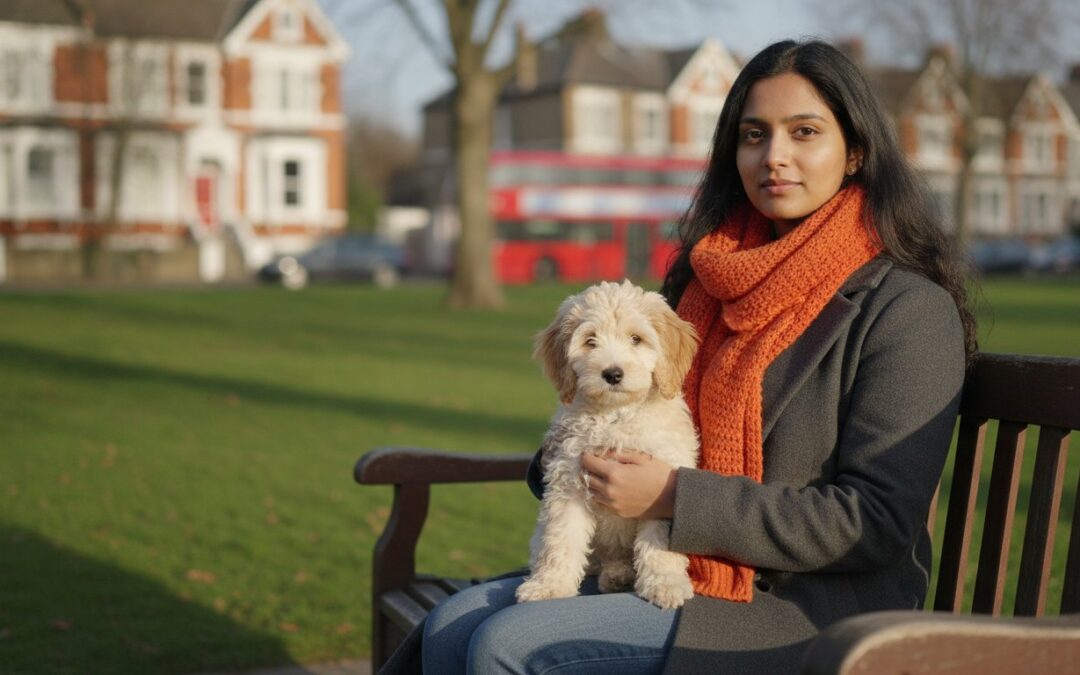
What if the most vital part of puppy socialisation North London owners overlook isn’t teaching their dog to greet every stranger, but helping them feel calm when they don’t? It’s a common misconception that socialisation means constant interaction. In a bustling city environment, the real goal is urban neutrality. You likely feel the pressure to ensure your pup is comfortable with the roar of the Underground or the frantic pace of a weekend market. It’s completely normal to worry about your dog becoming overwhelmed or reactive to the unique sounds and sights of our local streets.
This guide provides a clear, evidence-based roadmap to help your puppy grow into a resilient and happy adult dog. You’ll discover how to safely navigate the socialisation window before vaccinations are complete and why tailored 1-to-1 training often beats a chaotic group class. We also look at practical steps for managing London’s specific challenges, from local Public Spaces Protection Orders to preparing for that all-important first groom. By focusing on your puppy’s internal emotional state rather than just their outward behaviour, you can build a partnership based on mutual trust and quiet confidence.
Key Takeaways
- Understand the “Critical Socialisation Period” between 3 and 16 weeks and why this window is the foundation for your puppy’s long-term emotional health.
- Learn how to safely navigate puppy socialisation North London before vaccinations are complete by using controlled exposure methods, such as carrying your pup in a sling.
- Discover why bespoke 1-to-1 training provides a calmer, more effective alternative to crowded group classes for puppies living in high-stimulation city environments.
- Follow a structured checklist to introduce your dog to specific city triggers, including sirens, delivery bikes, and the unique bustle of the London Underground.
- Identify how early milestones, such as a “Puppy’s First Groom” in a mobile van, serve as essential positive experiences for building a confident adult dog.
Puppy Socialisation: Why the Critical Window Matters
Socialisation is the intentional process of teaching your puppy that the world is a safe, predictable, and manageable place. It’s not simply about play; it’s about building a library of positive experiences that your dog can draw upon for the rest of their life. For those of us raising dogs in busy boroughs, puppy socialisation North London requires a specific focus on urban resilience. While a dog in a quiet village might only encounter a cyclist once a week, a London puppy faces sirens, delivery bikes, and dense crowds every time they step outside. If we miss this developmental window, we risk raising a dog that views the city as a source of constant threat, which often manifests as anxiety, reactivity, or fear-based withdrawal in later life.
The Science of the 16-Week Window
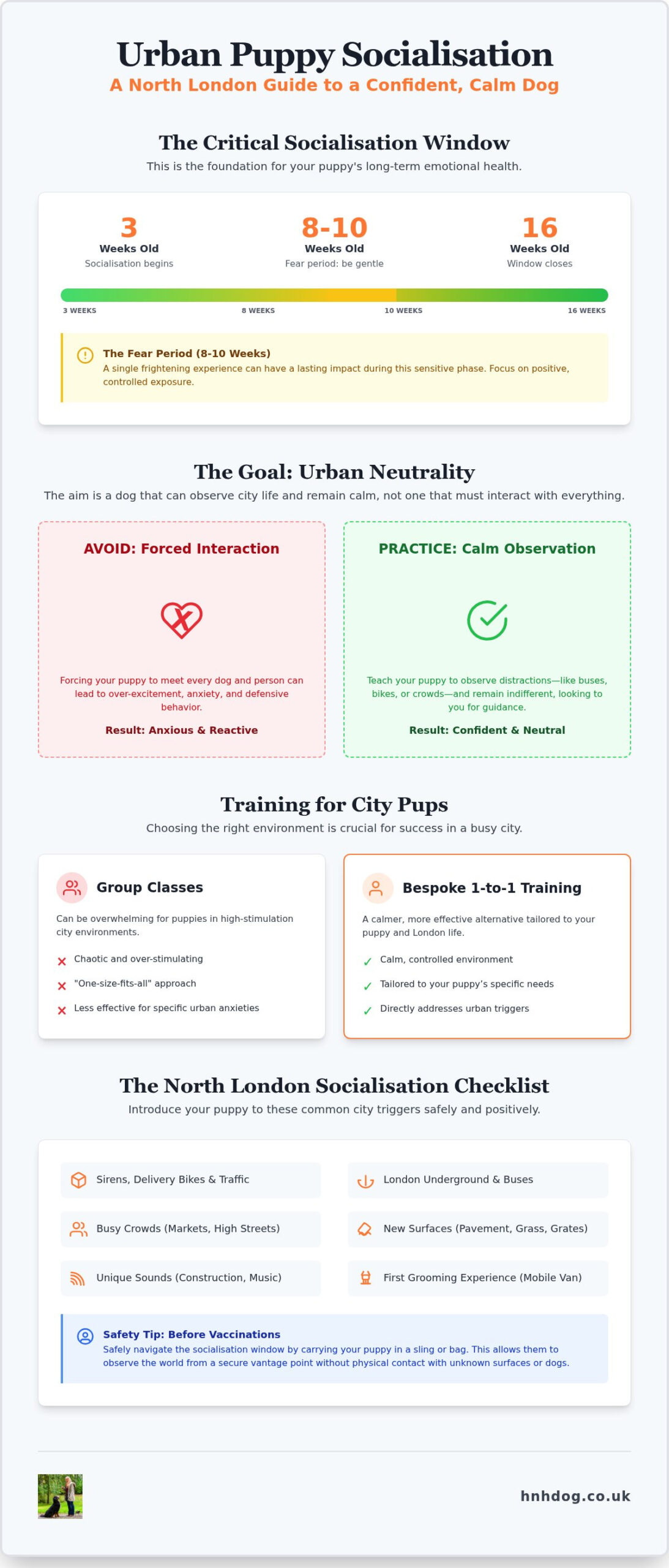
Biologically, puppies undergo a critical period for socialization that typically closes around 16 weeks of age. During this phase, their brains are incredibly plastic, forming neural pathways based on every new encounter. It’s a natural developmental window designed to help them identify what is “safe” in their immediate environment. You should be particularly mindful of the fear period that often occurs between 8 and 10 weeks of age, where a single frightening experience can have a lasting emotional impact. By using consistent positive reinforcement, we can create strong, positive associations with the unique sights and sounds of city life, ensuring your dog remains calm even when their surroundings are chaotic.
Socialisation vs. Local Exposure
A common myth in the dog world is that socialisation involves your puppy meeting as many people and dogs as possible. In reality, forcing interactions can lead to over-excitement or even defensive behaviour. True socialisation is rooted in neutrality. The goal is to raise a dog that can observe a distraction, such as a bus pulling away in Highgate or a crowd in Camden, and remain indifferent to it. We want your puppy to look to you for guidance rather than reacting to every passing stimulus. In these high-stimulation environments, you act as your puppy’s secure base. When they feel unsure about a skateboard or a loud pneumatic drill, your calm presence and structured support provide the reassurance they need to process the event without falling into a state of panic. This shift from active interaction to calm observation is what ultimately creates a confident, well-adjusted urban dog.
Navigating North London: Socialising Your Puppy for the City
North London presents a sensory landscape that can be both exhilarating and overwhelming for a young dog. From the screech of the Northern Line to the sudden appearance of a delivery bike on a narrow pavement, your puppy needs to learn that these events are background noise rather than threats. Effective puppy socialisation North London requires a proactive but gradual approach. Before your puppy is fully vaccinated, you can still begin this journey safely by carrying them in a specialised sling or bag. This allows them to observe the world from a secure vantage point without coming into contact with contaminated ground. The Royal Kennel Club provides an excellent foundation for understanding the core principles of puppy socialisation, which we then adapt for our unique urban setting.
When choosing where to train, balance is key. Start in quiet mews or residential streets before progressing to busy High Streets. If your puppy shows signs of hesitation, remember the “Distance is Your Friend” rule. Increasing the space between your pup and a loud skateboard or a crowded bus stop allows them to process the stimulus without reaching a state of panic. This prevents the development of “flooding,” where a dog is so overwhelmed they simply shut down rather than learning.
North London Parks and Green Spaces
Our local area is blessed with incredible outdoor spaces, but not all are equal for training. While Hampstead Heath and Highgate Woods offer vast trails, they can also be high-arousal environments due to the sheer volume of off-lead dogs. Focus on walking trails rather than fenced dog parks. Trails encourage low-arousal movement and sniffing, which helps lower cortisol levels. If you find yourself in a busy borough, keep interactions controlled and always advocate for your puppy’s personal space to ensure every encounter remains positive.
Urban Sights, Sounds, and Surfaces
Success in the city depends on familiarity with varied textures and noises. You can begin at home by playing recordings of sirens or buses at a low volume, pairing the sound with a high-value treat to build a positive association. Once outside, encourage your puppy to explore different surfaces, such as metal grates, shiny cafe floors, and wet pavement. Teaching your puppy to “settle” in a local cafe in Muswell Hill or Islington is a vital skill. It fosters patience and helps them remain calm while the world moves around them. If you feel unsure about managing these busy environments alone, our 1-to-1 puppy training sessions can provide the personalised guidance needed to master these urban challenges with confidence.
Classes vs. 1-to-1 Training: Which is Best for Your London Puppy?
Deciding between group classes and personalised 1-to-1 sessions is a pivotal choice for your dog’s future. While traditional classes are often seen as the standard, they can be a double-edged sword in a high-pressure urban environment. A village hall filled with six other barking puppies is a world away from the reality of puppy socialisation North London residents face on their daily walks. For many urban pups, the sensory overload of a group setting can lead to trauma rather than learning. By choosing a more tailored approach, you ensure that every new experience stays within your puppy’s threshold for stress, preventing the development of defensive behaviours from the very beginning.
1-to-1 training allows us to customise the curriculum to your exact living situation. Whether you are navigating the narrow stairs of a Victorian conversion or managing the distractions of a busy local high street, we work where your life actually happens. This is particularly vital during the critical socialisation period, where bespoke puppy socialisation North London sessions help prevent the development of reactive habits before they start. You gain the tools to handle real-world scenarios with confidence, knowing your puppy is learning in the environment they will inhabit every day.
When to Choose 1-to-1 Training
This path is often the kindest choice for puppies that are naturally nervous or easily overstimulated by noise. It provides the space to focus on bespoke challenges, such as toilet training a puppy in a London flat, where outdoor access might be limited. You receive the undivided attention of an expert who can read your puppy’s subtle body language, ensuring they never feel overwhelmed as they learn to navigate their new home. This personal mentorship builds a foundation of trust that generic classes simply cannot replicate.
The Role of Professional Group Walking
As your puppy matures, the focus shifts from basic exposure to maintaining social etiquette. Professional group dog walking serves as a bridge between puppyhood and well-adjusted adulthood. Unlike a chaotic park meeting, these structured sessions are designed to foster pack harmony under expert supervision. It’s about moving beyond simple play and teaching your dog to walk with manners alongside their peers. This consistent, supervised interaction reinforces the calm neutrality we strive for in a busy city, ensuring your dog remains a polite member of the community while enjoying their time outdoors.
The North London Puppy Socialisation Checklist
A successful roadmap for puppy socialisation North London relies on a structured yet flexible checklist. It’s not about rushing through a list of chores; instead, it’s about observing your dog’s emotional response to each new stimulus. A systematic approach ensures you don’t overlook the subtle triggers that define urban life. By tracking progress week-by-week, you can identify which areas require more distance and which your puppy handles with ease.
Focus your efforts on these three core categories for exposure:
- People: Children playing, people carrying umbrellas, workers in high-vis clothing, and cyclists passing at speed.
- Sounds: The sharp ring of a doorbell, emergency sirens, the rumble of thunder, and the constant hum of heavy traffic.
- Handling: Mimicking vet checks, touching each individual paw, and preparing for the tactile sensations of grooming.
The “Positive Association” Method
The secret to effective socialisation is pairing every new sight or sound with something wonderful. Use high-value treats to “mark” the moment your puppy notices a distraction. If they observe a delivery bike and then look back at you, reward that calm observation immediately. You must also learn to read their subtle body language for signs of stress. Actions such as yawning or lip licking often indicate that your puppy is “over threshold” and needs more space. When it comes to dog-to-dog meetings, the “Three Second Rule” is a vital tool. Allow a brief, polite sniff, then move away before the energy escalates. This ensures every greeting remains a controlled and positive experience.
Handling and Husbandry
Socialisation extends to how your puppy feels about being handled by humans. Preparing them for a lifetime of healthcare involves gently touching their ears, paws, and tail in a way that feels safe and rewarding. Introduce grooming tools at home, such as a soft brush or the low hum of a hairdryer, before they ever step into a professional environment. This home-based preparation acts as a vital bridge to their first professional puppy grooming session. By making these sensations familiar early on, you transform what could be a stressful event into a routine part of their shared life. If you are ready to begin their journey with a gentle, expert touch, you can book a Puppy’s First Groom today.
How H&H Dog Supports Your Puppy’s Socialisation Journey
At H&H Dog, we believe that raising a confident dog in a busy city requires more than just luck; it requires a structured, ethical partnership between owner and mentor. With over 20 years of experience in the industry, we have refined a holistic approach to puppy socialisation North London owners can rely on. Our services are designed to address the specific emotional needs of your puppy, ensuring they feel supported through every developmental milestone. Whether it is their first encounter with a professional groomer or learning to walk calmly past a crowded bus stop, we provide a steady hand to help you navigate these formative months with confidence.
Stress-Free Mobile Grooming
One of the most overlooked pillars of socialisation is husbandry. A puppy’s first experience with grooming can set the tone for their entire life. Our mobile grooming vans offer a unique advantage by providing a calm, one-to-one environment right outside your front door. This eliminates the stress of a busy salon, with its loud noises and multiple barking dogs. We recommend the “Puppy’s First Groom” as a vital socialisation milestone, typically starting with a gentle “Bath & Brush”. This low-stress entry point allows your puppy to build a positive, trusting relationship with the groomer, ensuring that future sessions are met with curiosity rather than fear.
Expert Training and Behavioural Support
While group classes can often be overwhelming for young dogs, our bespoke 1-to-1 training is tailored specifically to your home and local North London walking routes. This individualised attention allows us to identify and address early signs of separation anxiety or fear before they become ingrained habits. By using positive reinforcement and evidence-based methodology, we help you build a lifetime bond with your dog based on mutual understanding. Our goal is to empower you with the skills to manage urban challenges independently, fostering long-term emotional health for your pet. If you are ready to start your journey on the right foot, you can book your puppy’s first 1-to-1 session with H&H Dog today.
As your puppy grows, our professional group dog walking services provide the final piece of the socialisation puzzle. These walks are not just about exercise; they are supervised social sessions where your dog learns to maintain “pack harmony” and polite manners around their peers. By combining expert mobile grooming, personalised training, and structured social walking, we offer a comprehensive support system that ensures your puppy grows into a calm, resilient, and happy adult dog. This integrated approach values the animal’s perspective at every stage, making improvement inevitable with the right guidance.
Building a Resilient Future for Your Urban Dog
Navigating the complexity of puppy socialisation North London requires a shift in perspective. It’s not about constant interaction; it’s about fostering calm neutrality in the face of city chaos. By prioritising the critical sixteen-week window and choosing bespoke, 1-to-1 training over crowded classes, you provide your pup with a safe foundation. Every positive association with a siren or a busy high street is a step toward a more confident and happy adult dog.
We are here to act as your steady hand during this journey. With over 20 years of expert experience, our team is DBS checked, fully insured, and specialises in supporting nervous or young dogs. Whether you need a gentle introduction to husbandry in our mobile vans or personalised behavioural support, we ensure your puppy’s emotional welfare is always the priority. Book Your Puppy’s First Professional Training or Grooming Session with us today. You have the power to shape a shared life of mutual trust and quiet confidence.
Frequently Asked Questions
Can I socialise my puppy before they are fully vaccinated?
You can safely begin the process before full vaccinations by carrying your puppy in a sling or your arms. This allows them to observe the environment without touching contaminated ground. Early exposure to the sights and sounds of the city is vital for their development. Focus on “passive” socialisation where they watch from a distance. This builds a foundation of confidence while keeping their health a priority until they are medically cleared to walk.
What should I do if my puppy is scared of traffic in North London?
If your puppy is fearful, increase the distance between them and the road. Start your sessions on quiet residential mews before progressing to busier arterial roads. Use high-value treats to create a positive association every time a vehicle passes. Never force your dog to approach something that scares them. Instead, let them observe from a distance where they feel safe, rewarding their calm interest to build gradual resilience.
Are puppy classes better than 1-to-1 training for socialisation?
1-to-1 training is often superior for puppy socialisation North London because it prevents the sensory overload found in busy group classes. Many puppies find the noise and proximity of other dogs in a village hall traumatic rather than educational. A personalised session allows us to work in your local environment, addressing specific urban challenges. This focused approach ensures your puppy remains below their stress threshold while learning essential life skills at their own pace.
How often should my puppy meet other dogs?
Quality of interaction matters far more than frequency. Your puppy doesn’t need to greet every dog they see; in fact, teaching them to ignore others is a vital skill. Aim for a few calm, supervised interactions with known, well-socialised adult dogs each week. This teaches them that other dogs are a normal, non-threatening part of the world. Focus on “neutrality” where your pup remains relaxed in the presence of others without needing to play.
What is the best age to start professional puppy grooming?
We recommend starting professional grooming as soon as your puppy has completed their initial vaccination course, typically around 12 to 14 weeks. Our “Puppy’s First Groom” provides a gentle introduction to the sensations of bathing and brushing. Using a mobile grooming van reduces the stress of a traditional salon environment. Starting early ensures your dog views grooming as a positive, routine part of their life rather than a frightening event to be avoided.
How do I stop my puppy from being overwhelmed in busy London parks?
To prevent overwhelm, choose quieter times for park visits and stick to walking trails rather than high-arousal dog play areas. Watch for subtle signs of stress like lip licking or yawning. If you notice these, move to a more secluded spot immediately. Providing your puppy with “sniffing time” helps lower their cortisol levels and keeps them grounded. Your role is to be their advocate, ensuring they aren’t crowded by off-lead dogs or loud groups.
What are the best dog-friendly places in North London for socialisation?
Excellent spots include the quieter trails of Highgate Woods or the residential mews around Islington. These areas offer varied sights and sounds without the intense pressure of a high street. Many cafes in Muswell Hill are also welcoming, providing a great opportunity to practice “settle” training. Always choose a location that matches your puppy’s current confidence level. This ensures successful puppy socialisation North London by letting them process new information before moving to busier landmarks.