
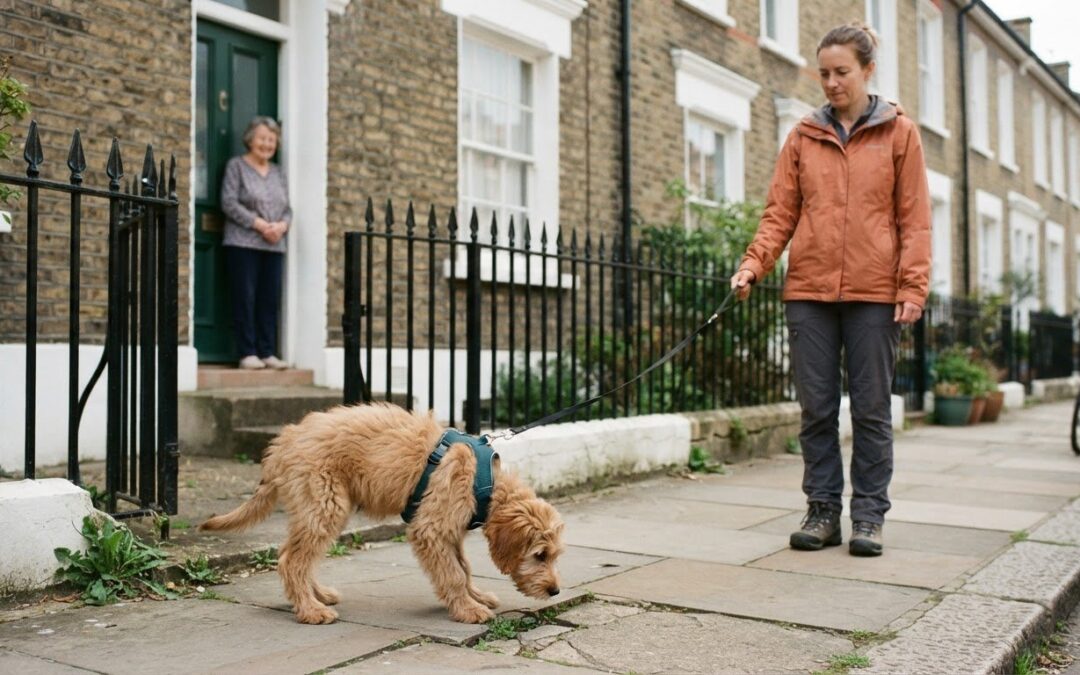
A puppy’s first walk with a new walker should build confidence, not test how far they can go. Knowing how to handle a dog’s first day with a walker starts with a calm introduction and a short, manageable outing, rather than a busy route or group walk. Other dogs can wait until your puppy feels more comfortable with the person and the experience.
It’s natural to wonder whether meeting other dogs will help your puppy settle in. But a new walker, unfamiliar surroundings and other dogs can be a lot to take in at once. Taking things in stages gives your puppy room to notice, sniff and pause without being hurried.
This guide explains how to prepare your puppy for their first proper walk, introduce the walker gradually and choose a calm first route. You’ll also learn how to approach other dogs, when a solo walk or home visit may be a better starting point, and what to have ready to help your puppy feel safer and more settled.
Key Takeaways
- Choose a quiet, familiar route and time so your dog can take in the walk without too many new distractions.
- Introduce the walker calmly and let your dog pause, sniff and build confidence at their own pace.
- Start with a short solo outing or home visit before considering group walks, especially if your dog is still settling in.
- For a puppy, prepare familiar walking equipment and follow your vet’s advice on when it’s ready to walk outdoors and meet other dogs.
1. Choosing quiet routes and times
For a first walk, choose a quiet time and a familiar route with fewer passing dogs, bikes and traffic. A newly adopted dog may need at least 3 days to adjust to a new home, and around 3 weeks to learn household routines. Many dogs take longer to feel fully settled, so keep the first outing simple rather than expecting them to cover a set distance.
Plan a short route close to home, such as a familiar pavement loop or a quiet stretch of nearby green space. Choose a path with room to pause and step aside if another dog approaches. Avoid busy entrances, narrow pavements and crowded parks at first. The walker can turn back early if your dog becomes unsettled; getting home calmly matters more than completing the route.
Prepare walking equipment that fits securely and feels familiar. Use a well-fitting collar or harness and a lead your dog has used before, rather than introducing new gear on the same day as a new walker. In the UK, a dog walked on a fixed harness must also wear a collar with an identification tag. Attach a longline to the harness, not the collar. Keep the lead manageable near roads and other people.
Before the walk, share your dog’s usual route, preferred pace and known triggers with the walker. Explain whether sudden movement, noisy traffic or dogs behind a fence tend to worry them. During the outing, look out for freezing, constant scanning, sudden pulling or lunging, and excessive panting. These can signal stress. If they appear, make things easier: pause somewhere quiet, move farther from the trigger or head home. A calm, familiar walk gives your dog space to get used to the new person while keeping the surroundings predictable. That’s more supportive than adding unfamiliar routes and busy encounters all at once.
2. Gradual introductions and confidence-building
Let your dog meet the walker in a familiar place before setting off. A calm greeting at home or in the garden gives them time to get used to the person without also managing a new route. Keep your own movements relaxed, and let your dog choose whether to approach, sniff or take a little space. If possible, keep the same walker for regular visits so their voice and presence become familiar.
For a nervous or reactive dog, begin with a quiet introduction and a short walk near home. Let them stop and take in what’s around them; don’t pull them towards people or dogs, and slow down or head home if they become more stressed. The practical answer to how to handle a dog’s first day with a walker is to follow your dog’s signals, not a distance target. A small step forward could mean walking a little farther or recovering more quickly after a sound or sight that previously unsettled them.
A new walker’s handling or an unexpected trigger may overwhelm your dog and make the outing harder to manage. Reduce the risk by explaining your dog’s routines, known triggers and preferred ways to settle. Then agree on a calm first outing rather than starting with a full group walk.
Build the walk’s duration around your dog, not a fixed target. If they explore, respond to the walker and recover comfortably after a minor surprise, gradually extend a familiar route on later walks. If they hesitate, keep the next outing shorter or repeat the same route. This makes progress easier to recognise and avoids adding distance before they’re ready.
Use familiar treats to reward voluntary engagement, such as checking in with the walker or moving calmly past a mild distraction. For especially good behaviour, one recommendation is to give 10 small treats over the course of a minute. Keep portions small and account for treats in your dog’s usual food. Understanding how to handle a dog’s first day with a walker also means noticing which small experiences help your dog feel safe and ready to continue.
3. Solo walks and home visits before group sessions
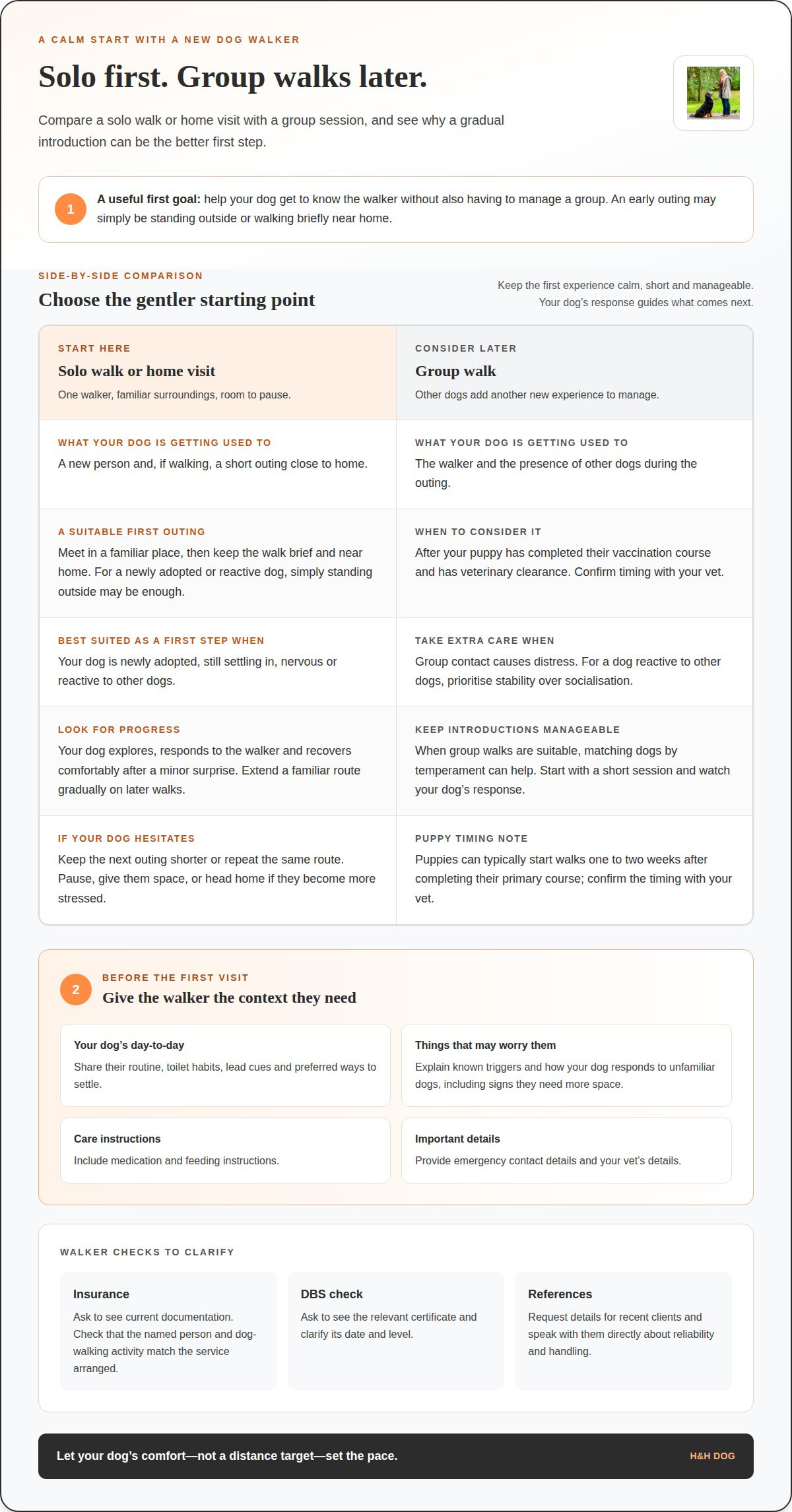
A solo walk or home visit lets your dog get to know the walker without managing a group. For a newly adopted or reactive dog, the first outing might simply mean standing outside or walking briefly near home. Keep early walks calm, short and manageable. The aim is to help your dog feel safe, not to cover distance or provide a full exercise session.
Before the first visit, share your dog’s routine, triggers, toilet habits, lead cues and preferred ways to settle. Include medication and feeding instructions, emergency contact details and your vet’s details. Explain how your dog responds to unfamiliar dogs, including signs they need more space. This gives the walker useful context to respond consistently, rather than having to guess when your dog pauses, avoids contact or becomes unsettled.
For insurance, ask to see current documentation and check that the named person and dog-walking activity match the service being arranged. For a DBS check, ask to see the relevant certificate and clarify its date and level. For references, request details for recent clients and speak with them directly about reliability and handling. These checks help you understand the walker’s background and the cover they hold.
For puppies, wait until they’ve completed their vaccination course and have veterinary clearance before group walks or daycare. Puppies can typically start walks one to two weeks after completing their primary course, but confirm the timing with your vet. Take care with outdoor walks until your puppy is fully protected. When group walks are suitable, matching dogs by temperament can make introductions more manageable. Start with a short session and watch how your dog responds to the others. If your dog is reactive to other dogs, prioritise stability over socialisation; calm solo outings are a better first step if group contact causes distress.
4. Preparing for a puppy’s first walk with a new walker
Before the first outing, practise clipping on the lead in a quiet room or garden. Let your puppy explore a well-fitting collar or harness and a familiar lead. Pair the equipment with calm praise or a familiar treat, then keep practice brief. This helps the walker start with familiar cues instead of introducing every part of walking at once.
Before your puppy’s first proper walk, make sure they’re microchipped and their contact details are current on the database. In the UK, a dog walked on a fixed harness must also wear a collar with an identification tag. Give the walker clear notes about feeding, treats, medication, toilet cues and your vet’s details. A favourite toy or blanket can also provide a familiar scent during an early visit.
Be cautious about letting your puppy walk on the ground outdoors while vaccinations are still in progress. A carrier or secure pram can let them experience outside sights and sounds; at home, contact with dogs whose vaccinations are up to date is suitable. Keep puppies away from ponds and stagnant water because of leptospirosis risk, and take care in gardens frequently visited by foxes, as fox urine can spread the disease. Follow your vet’s advice about when ground walks can begin.
After the walk, ask the walker how your puppy responded to the lead, route, people and other dogs. Note whether they toileted, took treats, paused often or seemed unsettled, then share any changes in their normal behaviour. Use those details to shape the next outing: repeat what felt manageable and make things gentler if your puppy struggled. A short, calm first walk can tell you more than distance alone.
For support practising lead skills and confidence before walks, explore puppy training.
H&H Dog: Puppy’s First Groom
H&H Dog’s Puppy’s First Groom gives your puppy a gentle introduction to grooming as they get used to new people and handling. It’s a natural next step when your puppy is ready for care beyond their first walks, with the experience tailored to their needs and temperament.
Keep building positive routines at home by helping your puppy get comfortable with brief, gentle handling of their paws, ears and coat. A familiar routine can help you notice what feels comfortable for them and share useful details before a grooming visit. If your puppy is also ready to meet other dogs, Group Dog Walking may suit them once their vaccinations are complete and your vet has cleared them for group walks.
For a puppy’s first grooming experience, contact H&H Dog to discuss Puppy’s First Groom.
Make the first outing the start of a trusted routine
Your dog’s first experience with a walker can shape how they feel about future outings. Treat it as the beginning of a relationship: share what helps your dog feel settled, listen to what the walker notices and use those observations to guide the next step. A calm routine can grow as your dog becomes more comfortable.
If you’re deciding how to handle your dog’s first day with a walker, choose a pace that respects their signals rather than pushing for a particular result. H&H Dog offers Group Dog Walking, alongside Puppy’s First Groom, Full Groom and Bath & Brush for your dog’s grooming needs.
Contact H&H Dog to plan a walk that gives your dog a thoughtful start. Each calm, supportive experience can help make the next one feel more familiar.
Frequently Asked Questions
What about other dogs?
Let your dog’s comfort, not a socialisation goal, determine how close they get to other dogs. Ask the walker to give your dog space, avoid greetings on a tight lead and move away if your dog stiffens, hides or fixates. For example, watching another dog from across a wide path can be a calmer first experience than meeting nose to nose.
Should I arrange a meet and greet before a dog’s first walk?
Yes, a meet and greet gives your dog a chance to get familiar with the walker before you part. Choose a place where your dog can move freely, such as your garden or living room, and let them approach at their own pace. The walker can learn which greetings your dog enjoys and what signals mean they need more space.
How long should a dog’s first walk with a new walker be?
Keep the first walk short enough for your dog to stay engaged without becoming overwhelmed. There isn’t one ideal duration for every dog: age, health, previous walking experience and their response to the surroundings all matter. If your dog seems unsettled or stops responding to familiar cues, end the outing calmly. Build up only when they’re coping comfortably.
What should a dog walker bring on a first walk?
The most useful equipment is often your dog’s own well-fitting collar or harness and a familiar lead, supplied with clear instructions on how they fit. For a puppy, share a favourite toy or blanket for comfort during the visit. Give the walker any feeding, medication or treat instructions in writing, so essential details are easy to follow during the outing.
Should the first walk be solo or with other dogs?
For most dogs meeting a new walker, a solo first outing makes it easier to focus on the person and notice how your dog responds. A group can add noise, movement and social pressure before the new relationship is established. Consider group walks later if your dog is comfortable around other dogs and can settle while sharing the walker’s attention.